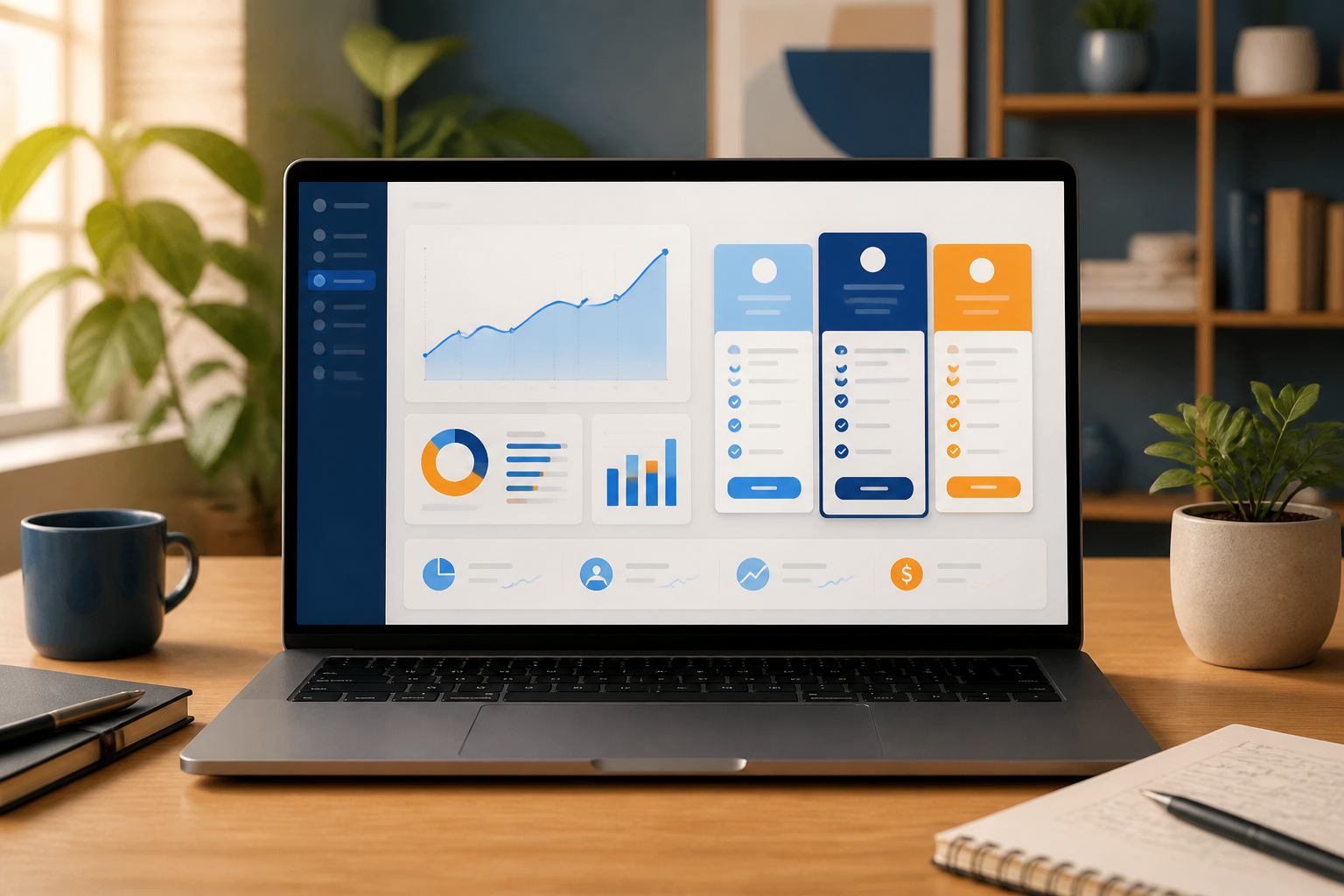
Many SaaS products start with three package options: Basic, Pro, and Enterprise. This pattern is simple, easy to set up on the pricing page, and quite effective for some businesses. However, there is a problem when the value of the product heavily depends on how often or how much the service is used.
For example, document processing applications, email delivery services, APIs, data storage, or platforms using AI models. Small customers may only use the service a few times a month, while others run thousands of processes every day. If both pay the same fixed price, one party may feel disadvantaged.
This is where usage-based pricing becomes appealing. Customers pay according to their consumption, not just based on access to features.
What is usage-based pricing?
Usage-based pricing is a monetization model where the bill changes according to customer usage. The units used must be clear, such as the number of transactions, emails sent, processing minutes, storage capacity, API calls, or credits used.
In practice, this model does not always mean customers pay without a fixed fee. SaaS can combine several approaches, such as:
- Pay as you go without a subscription fee.
- Fixed monthly fee with a certain usage limit.
- Subscription fee plus a rate for overage usage.
- A credit system purchased in advance that decreases each time the service is used.
Documentation from Stripe explains that this model requires tracking usage data, setting pricing, billing processes, and monitoring usage thresholds. This means the model is not just about changing numbers on the pricing page.
When does this model make more sense?
1. Operational costs increase as usage rises
Usage-based pricing is suitable when every customer activity adds costs for the service provider. For example, the more files processed, the greater the need for computing and storage. The same goes for API services that must handle more requests as customers grow.
With this model, revenue can increase alongside operational burdens. However, companies still need to calculate costs per unit to ensure rates are not only attractive but also yield a healthy margin.
2. Customers have very different usage patterns
The fixed subscription model is less flexible if one customer is active every day while another only uses the product during certain periods. Usage-based pricing allows customers with smaller needs not to have to purchase a large package upfront.
This can lower the barrier for potential customers who want to try it out. They do not feel they have to pay the full price before understanding the benefits of the product.
3. Product value is easily measured in specific units
This model is easier to understand if the usage units are directly related to the benefits. In email services, the number of emails sent may be quite clear. In storage services, data capacity is also relatively easy to explain.
Conversely, do not impose usage-based pricing if the metrics are difficult to understand or do not reflect the value perceived by customers. Calculating "the number of internal clicks" may be technically accurate, but it may not make sense to users.
Commonly Overlooked Risks
Usage-based pricing offers flexibility but can also create anxiety. Customers may fear receiving a skyrocketing bill due to configuration errors, traffic spikes, or unintentional automated activities.
Therefore, transparency becomes part of the product. Users should be able to see ongoing usage, estimated bills, and notifications when approaching certain limits. Stripe, for example, documents usage meters and notification settings when customers exceed certain usage thresholds.
Another risk is that revenue becomes harder to predict. With fixed subscriptions, companies can estimate monthly revenue based on the number of active customers. In a usage-based model, those figures are influenced by user behavior from month to month.
This uncertainty is not a reason to avoid it, but it needs to be balanced with good analytics. Pay attention to average usage patterns, high-consumption customers, customers who suddenly stop using the service, and the relationship between usage and retention rates.
Don't Start with Rates, Start with Value Units
A common mistake when designing pricing is to immediately ask, "What is the price per thousand transactions?" A more important question is, "What activities truly generate value for customers?"
For example, a report automation application is not always most valuable because it generates many reports. Its value may lie in the time saved, reduced errors, or decisions that can be made faster.
If usage does not always align with value, a hybrid model may be more appropriate. Customers pay a base fee for access and support, then pay extra when certain capacity or volume thresholds are exceeded.
This approach can also give companies room to maintain minimum revenue without penalizing customers whose monthly usage is low.
Practical Steps to Test Pricing Models
- Choose one metric that is easiest to explain. Avoid using too many variables at the early stage. Select a unit that customers can understand without needing lengthy explanations.
- Calculate internal costs per unit. Include server costs, third-party services, customer support, maintenance, and potential abuse.
- Create simulations for three types of customers. Test customers with low, average, and high usage. Ensure there are no scenarios that would cause the business to lose money.
- Set security limits. Add quotas, notifications, spending limits, or automatic shutdowns to prevent customers from receiving surprise bills.
- Test with real customers. Offer the model to a small number of users and ask if they understand how the billing works.
- Compare with the value received. If customers pay more, ensure they also receive visible benefits, not just access to more features.
What Does This Mean for Small Businesses?
For independent developers or small businesses, usage-based pricing can be a way to serve customers with varying scales of needs. Products do not have to immediately have many packages. A single base fee and a clear usage metric are often enough to get started.
However, do not use this model as a way to hide pricing. If potential customers have to do complicated calculations before knowing the estimated costs, trust can decline. Display simple billing examples, such as "500 transactions per month costs approximately this amount" and explain what happens if that limit is exceeded.
In conclusion, usage-based pricing is not automatically better than fixed subscriptions. This model is most useful when consumption is easy to measure, operational costs change, and customers feel the rates are proportional to the value they receive.
For SaaS products still finding their shape, the best approach is usually not to choose the most complicated model, but to test the easiest-to-understand model. Start with one value unit, create transparent billing, and then use usage data to improve it.
Sources & Further Reading
- How usage-based billing works
- Integrate a SaaS business on Stripe
- Analytics for recurring and usage-based billing
– Rio Yotto @rioyotto