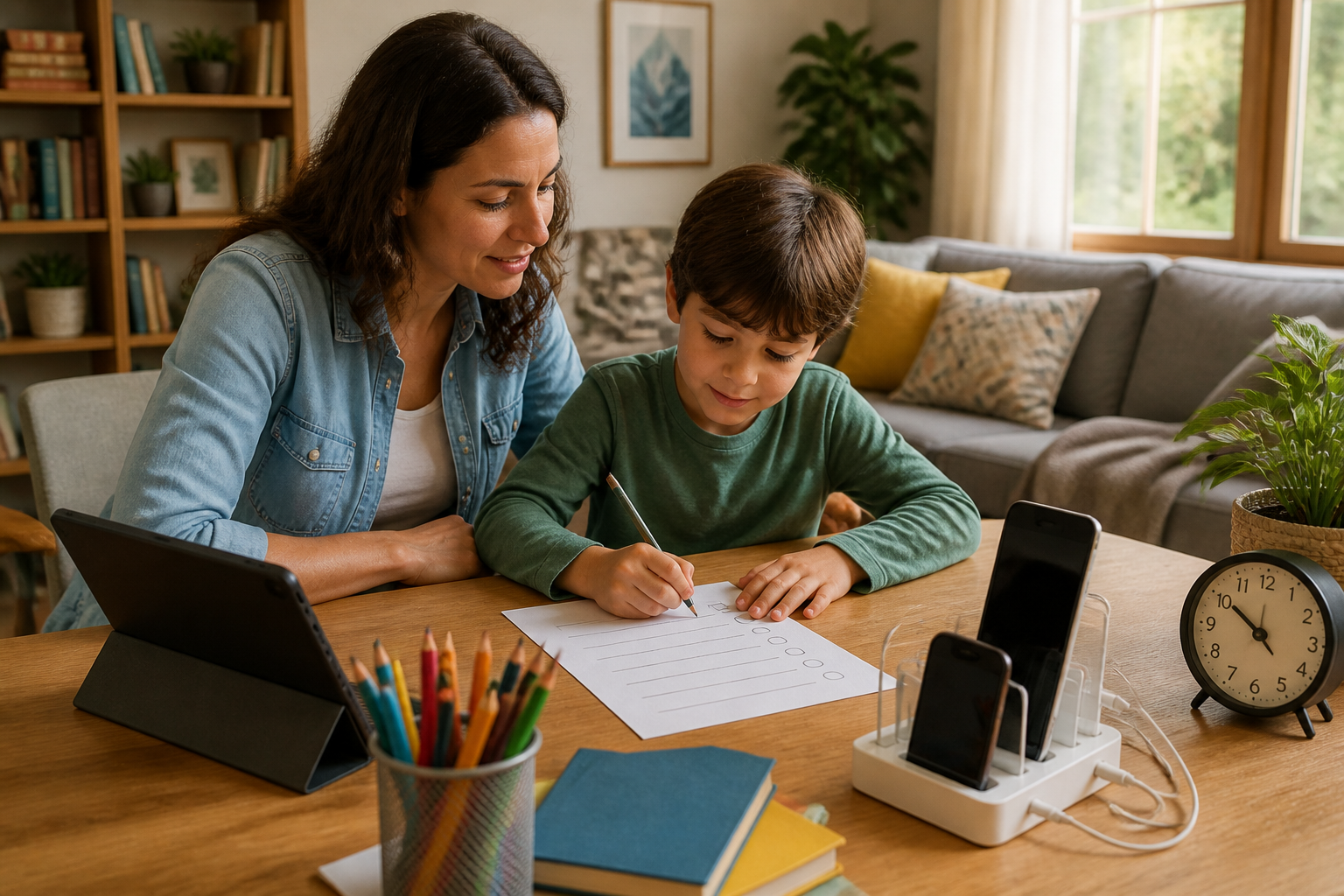
Statements like "Alright, turn off your phone" usually arise when the atmosphere at home becomes tense. The child still wants to watch one more video, finish one more round of a game, or reply to a friend's message. Parents feel that the rules are not respected, while the child feels their time is abruptly cut short.
The problem is often not just about duration. Children also need to learn when gadgets can be used, what they can be used for, and what to do when they encounter something that makes them uncomfortable. Therefore, good gadget rules should take the form of family agreements, not just a list of prohibitions.
The American Academy of Pediatrics (AAP) recommends that families create a media use plan tailored to their routines and values. This plan can include screen-free time, types of content, privacy, parental controls, and the digital habits of all family members—including parents. AAP's Guide on Family Media Plan also emphasizes that rules need to be reviewed as children's ages and needs change.
Why Time-Based Rules Alone Are Often Not Enough?
Time limits are still useful, but numbers do not always reflect the quality of usage. Twenty minutes of reading a digital book for schoolwork is certainly different from twenty minutes of aimlessly scrolling through short videos.
This is why parents need to consider three things at once:
- Content: What is the child watching, playing, or reading?
- Context: Is the gadget being used for learning, communication, creativity, or just to pass the time?
- Impact: Is gadget use interfering with sleep, meals, schoolwork, physical activity, or relationships with family?
This does not mean that duration is unimportant. Features like autoplay, notifications, and endless scrolling are indeed designed to keep users engaged in the app. Therefore, turning off unnecessary notifications and disabling autoplay can be simple steps to reduce temptation.
Build Agreements with Concrete Language
The rule "use gadgets wisely" sounds good, but it is too vague for children. It is easier to follow if the rules explain situations specifically.
For example:
- Gadgets are put away during family meals.
- Schoolwork and bedtime preparations are completed before playing.
- Devices are charged in the family room, not in the bedroom.
- Children ask for permission before downloading new apps or making purchases.
- If a message, image, or invitation makes them uncomfortable, children can close it immediately and talk about it without fear of being scolded.
Notice the difference. These rules do not just say "don't take too long," but provide children with actionable guidance. Children also find it easier to understand the reasons behind the rules if parents explain them: screen-free time helps with sleep, family meals provide opportunities to talk, and devices in the family room make it easier for everyone to help each other.
Use "Before and After" Rules, Not Just "During"
Many conflicts arise because parents only talk when playtime is over. Try to establish a routine in three stages.
Before Using Gadgets
Children need to know what activities should be completed first. For example, making the bed, finishing math homework, or taking a shower. For younger children, use a short checklist that can be seen, rather than long instructions that are repeated.
While Using Gadgets
Set clear goals and limits. "You can play until the alarm goes off" is clearer than "don't take too long." For activities that are hard to stop, like online games, give a 10 and 5-minute warning beforehand. AAP also recommends that families create rules together and involve children in discussions so that usage limits do not feel like unilateral punishment. AAP's Explanation on Handling Conflicts When Screen Time Ends discusses the importance of a joint plan and consistency.
After Using Gadgets
Prepare alternative activities. Children will find it easier to stop if they know what they will do next: reading comics, helping prepare snacks, playing outside, drawing, or talking with parents. Taking away gadgets without providing a transition often makes children feel like they are abruptly losing a fun activity.
Teach Online Safety as a Daily Habit
Parental controls can help, but they cannot replace conversations. Children need to understand that full names, home addresses, school names, phone numbers, passwords, locations, and certain photos are personal information.
Teach the following simple rules:
- Do not give personal data to people you just met online.
- Do not meet online friends without the knowledge of a trusted adult.
- Do not open links or download files if the source is unclear.
- Use different passwords for important accounts.
- Report and block accounts that threaten, coerce, or ask for secrets.
For children under 13 years old in the United States, the Children’s Online Privacy Protection Act (COPPA) gives parents certain rights regarding the collection of personal data by online services. However, legal rules are not a substitute for guidance. The Federal Trade Commission explains parents' rights in protecting children's privacy, including reviewing or requesting the deletion of certain information.
Parents Are Also Part of the Agreement
Children quickly pick up on inconsistent rules. If children are prohibited from bringing phones to the dinner table, but parents continue to check messages while eating, the message received is not "family time is important," but rather "this rule only applies to children."
Therefore, include parental commitments in the agreement:
- Do not check phones while children are talking.
- Keep devices away from the bedside at night.
- Ask for permission before taking or sharing photos of children.
- Be willing to look at new apps or games with children.
Role models do not have to be perfect. If parents are caught up with screens, simply acknowledge and correct it: "I was still looking at messages while you were talking. Now I will put my phone away and listen." Such an attitude teaches that digital habits can be evaluated, not something that must be maintained to appear always right.
What Can Be Done Now
Take about 20 minutes to create the first draft of the family agreement. Choose the three most important rules, write them in simple sentences, and then agree on reasonable consequences if the rules are broken. Avoid overly harsh and unrelated punishments, such as banning gadgets for a month for forgetting to turn off a device.
After one week, ask three questions: which rules are easy to follow, which parts often cause conflict, and what changes need to be tried. A good plan does not have to be perfect right away. The goal is to help children practice managing attention, maintaining privacy, and using technology as a tool—not letting technology dictate their entire day.
Sources & Further Reading
- How to Make a Family Media Plan — HealthyChildren.org, American Academy of Pediatrics
- Screen Time & Temper Tantrums: Helpful Tips for Parents — HealthyChildren.org
- Protecting Your Child’s Privacy Online — Federal Trade Commission
– Rio Yotto @rioyotto